
Camping in NW Larimer County: The Complete FAQ: (Poudre Canyon, Red Feather Lakes & Cameron Pass)
From the mouth of the Poudre Canyon at Ted’s Place to the tundra below Cameron Pass, and from the lakes at Red Feather to the free pull-offs along Deadman and Manhattan roads, Northwest Larimer County is one of the best — and least crowded — places to camp in Colorado. It is also big, and the rules change depending on exactly where you throw down. This is our plain-English answer to just about every camping question we get, for the whole corridor, so you can plan a trip that actually works. We camp this country ourselves, and every photograph on this site is our own.
Start here: the Camping & Campgrounds overview, our dispersed camping guide, the campground guides & maps, and — before you pack the car — the current fire restrictions.
Getting oriented
Where exactly is the camping in Northwest Larimer County?
In the mountains of Northwest Larimer County, Colorado — the corridor that climbs northwest out of Fort Collins. It follows the Cache la Poudre River up Highway 14, reaches north to Red Feather Lakes and Livermore, and west to Cameron Pass and the Rawah Wilderness. Almost all of it is Arapaho & Roosevelt National Forest and State Forest State Park — public land, open to camping.
How far is the camping from Fort Collins?
Close. The canyon begins about 10 miles northwest of Fort Collins about two miles past Ted’s Place (the junction of Highway 287 and Highway 14). From there, Poudre Canyon campgrounds are anywhere from 30 minutes to about 90 minutes up the highway. Red Feather Lakes is roughly an hour from town up 74e, (about 50 miles) and is also connected to the canyon via Boy Scout road. You can be set up at a mountain campsite before lunch.
What county is Red Feather Lakes and the Poudre Canyon in?
Larimer County in zip codes 80512, 80536 and 80512. The camping described here sits in the county’s wild northwest corner, up against the Wyoming line and the Continental Divide.
Types of camping in the corridor

What kinds of camping can I do here?
Four, plus a roof option. (1) Free dispersed camping on National Forest land — no fee, no reservation, no services. (2) Developed Forest Service campgrounds — marked sites with toilets, usually reservable. (3) Private campgrounds & RV resorts — hookups, showers, cabins and extras. (4) Backcountry camping in the Rawah and Comanche Peak wilderness areas. And if you would rather not sleep in a tent, there are cabins.
I just want to camp near Fort Collins – where do I go?
Point the car up the Poudre Canyon on Highway 14. Within an hour of Fort Collins you will pass a dozen Forest Service campgrounds strung along the river, plus the turnoff to the Red Feather lakes. It is the same Rocky Mountains as Estes Park and Rocky Mountain National Park — without the entrance station, the timed-entry reservation, or the crowds. For a ranked shortlist, see the 12 best places to camp near Fort Collins.
Free & dispersed camping

Is there free camping near Red Feather Lakes?
Yes. Dispersed (free) camping is allowed across much of the Arapaho & Roosevelt National Forest in this corridor — no reservation, no fee. You camp in an existing, already-used site, follow Leave No Trace, and accept that there are no toilets, no water, and no trash service of any kind.
Where is the best dispersed camping?
The best-known free areas are along Deadman Road (up toward the fire tower — pull-offs that fit anything from a tent to a large RV at some sites), the Manhattan Road corridor near Red Feather, and the rugged spurs toward Lost Lake (high-clearance, 4WD). Up top, Long Draw Road has a set of marked dispersed sites. Our Long Draw dispersed camping guide walks the Long Draw sites in honest detail.
How long can I stay dispersed camping, and what are the rules?
The best-known free areas are along Deadman Road (up toward the fire tower — pull-offs that fit anything from a tent to a large RV at some sites), the Manhattan Road corridor near Red Feather, and the rugged spurs toward Lost Lake (high-clearance, 4WD). Up top, Long Draw Road has a set of marked dispersed sites. Our Long Draw dispersed camping guide walks the Long Draw sites in honest detail.
Developed campgrounds
What campgrounds are in the area?
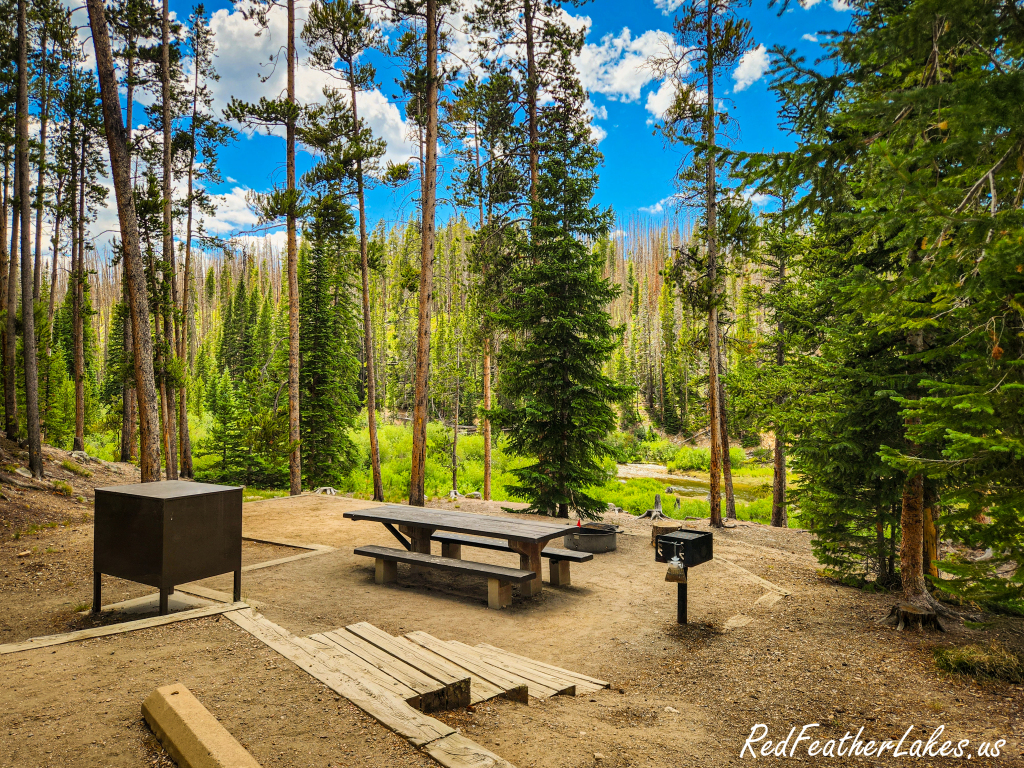
Dozens. Around Red Feather Lakes: Dowdy Lake, West Lake, Bellaire Lake, and North Fork Poudre. Down the Poudre Canyon along Highway 14: Ansel Watrous, Stove Prairie, Mountain Park, Kelly Flats, the Narrows, Dutch George, Big Bend, Sleeping Elephant and Big South — and up high, Chambers Lake, Aspen Glen and Long Draw. Most are Forest Service. The campground guides & maps page has a guide to each, with an interactive map.
Which campgrounds have showers, water, or amenities?
Amenities vary by site. Most Forest Service campgrounds have vault toilets and drinking water but no showers; the larger campgrounds (Dowdy, West Lake, Mountain Park, Chambers Lake) tend to have the most. For hot showers and full facilities, the private resorts — Riverside Colorado, Beaver Meadows Resort Ranch and Alpine Lodge — are your best bet. Check each campground’s guide for exactly what it offers
Which campgrounds take RVs or have hookups?
West Lake is the standout — it has electrical hookups, which are rare on Forest Service land — and Dowdy Lake, Chambers Lake, Long Draw, Mountain Park and Bellaire Lake all take RVs. For full hookups (water, sewer and electric) or a big rig, go private: Beaver Meadows Resort Ranch and Alpine Lodge take RVs up to 40 feet. Glen Echo Resort even does seasonal rentals. Some Deadman Road dispersed pull-offs fit larger rigs too, but with zero services.
Which campground is best for families or lake access?
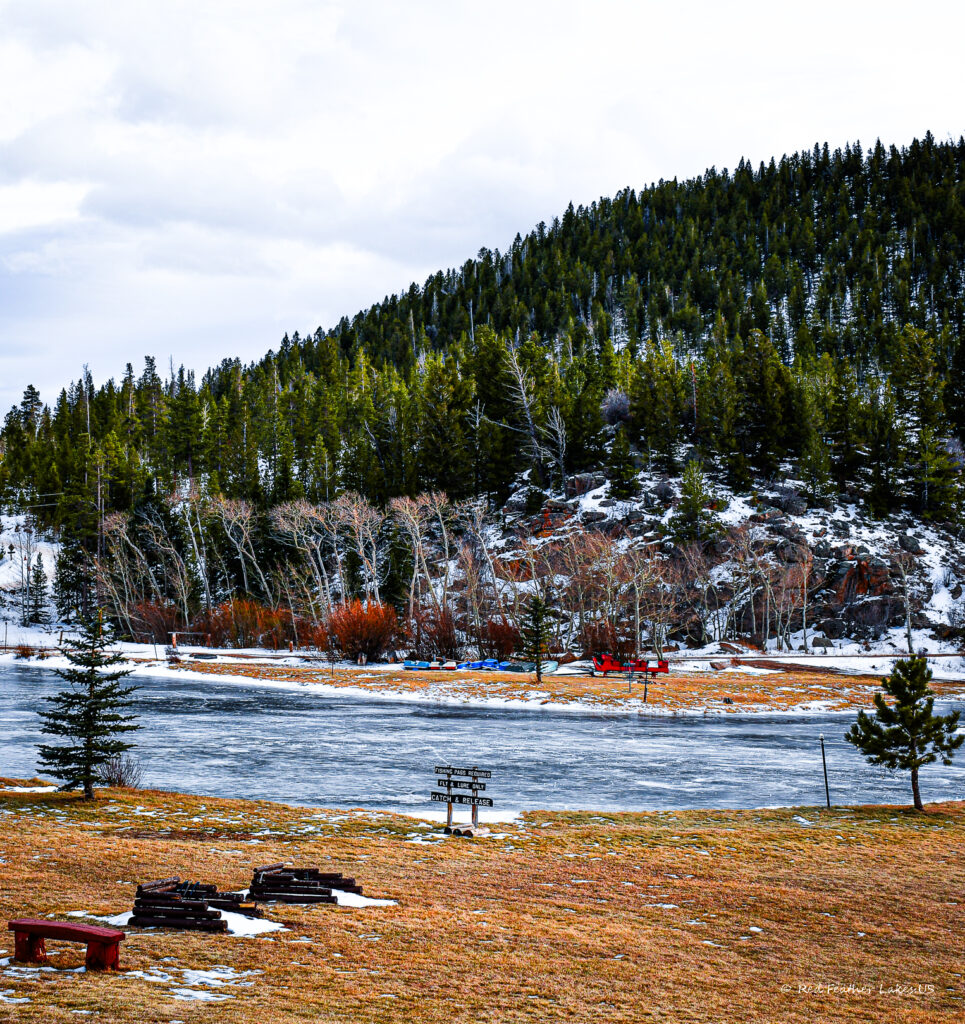
Dowdy Lake is the local family favorite — 70 sites with the water at your doorstep, granite islands, and easy paddleboarding, kayaking and trout fishing. West Lake sits a stone’s throw from the village with electric sites, and Bellaire Lake has a wheelchair-accessible boardwalk down to the water. Chambers Lake and Mountain Park have playgrounds.
Cabins & RV rentals

Are there cabins for rent near Red Feather Lakes?
Yes — the Red Feather Lakes area and the Poudre Canyon have a solid range of cabins. Local options include Alpine Lodge (cabins, tiny homes and an RV rental near downtown), Glen Echo Resort (cabins on the Poudre River in Rustic), and Gordon Park RV Resort (two lakeside cabins in Glacier View Meadows). Up In the Cameron pass area, there are historic cabins and yurts available from Yonder Yurts. Our full cabin rentals guide covers each those and more.
Can I rent a Forest Service cabin?
You can. The Red Feather Ranger Cabin and the Assistant Ranger Cabin are rustic U.S. Forest Service rentals, booked through the federal recreation reservation system. They are basic and genuinely remote — a cabin roof over a backcountry experience — and they book up early for summer.
Where else can I find a cabin to rent?
The usual vacation-rental platforms — VRBO, Airbnb, Evolve and others — list private cabins across the area. One heads-up: Larimer County short-term-rental rules have tightened availability since 2023, so desirable cabins book well ahead — reserve early, especially for summer and holiday weekends. Keep checking back with us as well: we will be listing locally hosted cabins for booking right here on our site without the crazy Airbnb fees!
Reservations & fees
Do I need a reservation to camp?
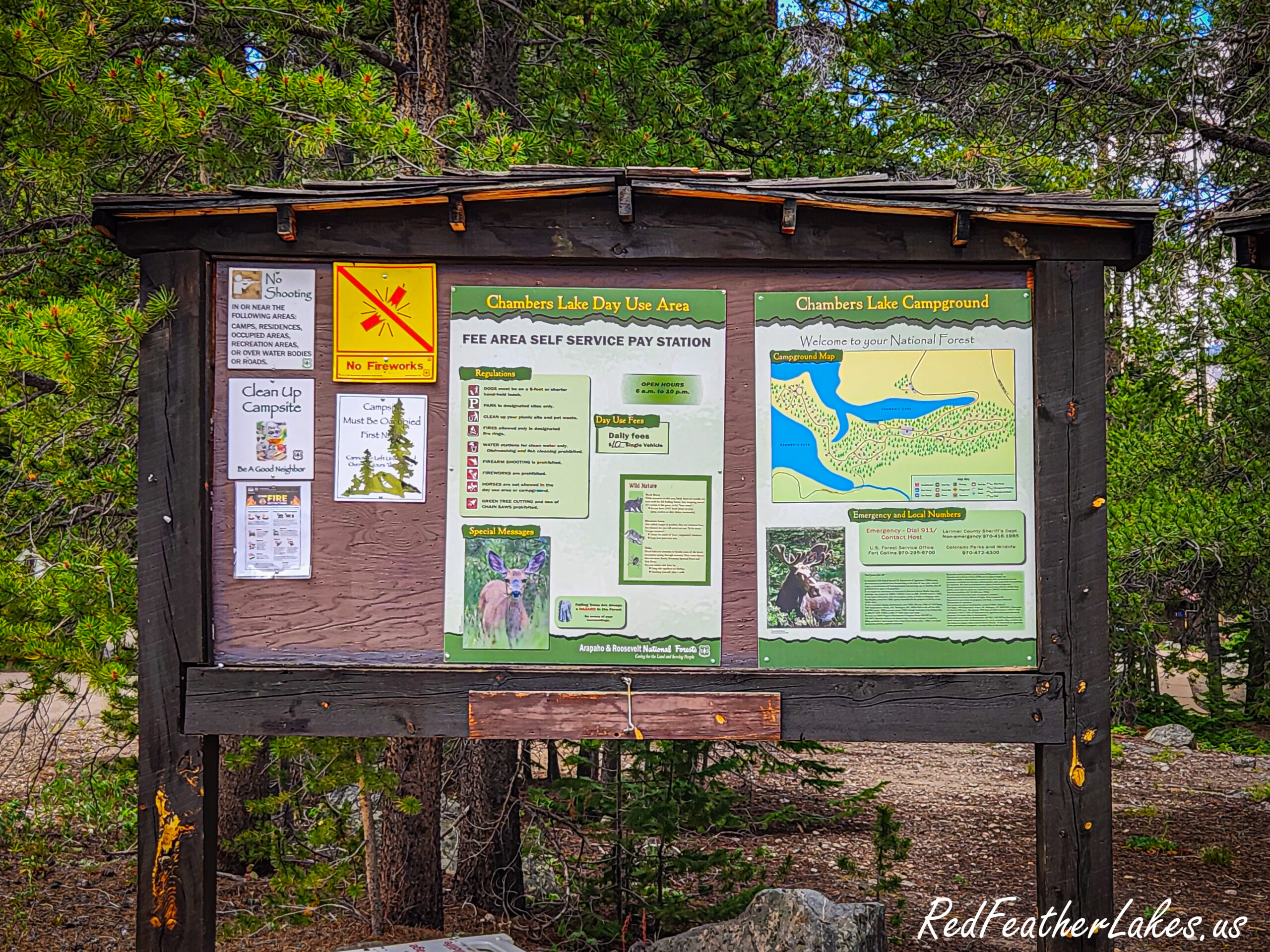
For developed Forest Service campgrounds in summer, usually yes — reserve through the federal recreation reservation system (Recreation.gov). Find direct links to our favorites on our 12 Best Places to Camp Page. A few sites hold back first-come, first-served spots. Dispersed camping needs no reservation at all. Private resorts and cabins book through their own websites.
How much does camping cost?
Dispersed camping is free. Forest Service campground fees are modest per night — check the current per-site rate when you reserve (2026 rates are hovering 20-30 for tent sites and $40-80 for single RV sites). Private campgrounds, RV resorts and cabins range from reasonable to splurge depending on hookups and amenities.
How far ahead should I book a campsite?
For summer weekends and holidays, book the popular lake campgrounds (Dowdy, West Lake) and any cabin weeks — sometimes months — in advance. Midweek stays and the shoulder seasons (early June, September) are far easier to grab.
Campfires & fire restrictions
Can I have a campfire?
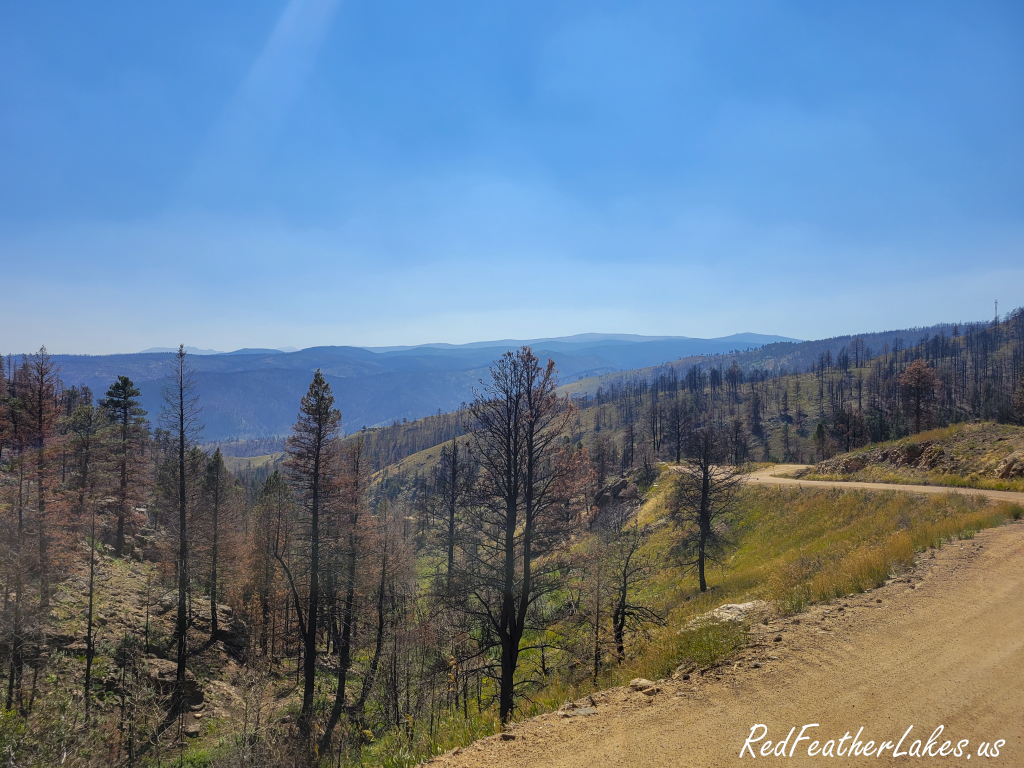
Only when there is no fire ban in effect — and in this dry, high country, bans are common through the exact summer months you would want to camp. A rock fire ring on the ground does not mean fires are currently allowed. Always check the current stage of restrictions before you leave home: see our Larimer County fire restrictions page for what is in effect right now.
What can I use during a fire ban?
Usually, camp stoves and fire pits fueled by bottled gas or liquid fuel with an on/off valve are still allowed even under restrictions, while open wood and charcoal fires are not. We recommend LavaBox. Rules differ by jurisdiction and by whose land you are standing on, so confirm the exact rules for your spot before you rely on any flame on our Larimer County fire restrictions page.
Seasons & weather
When are the campgrounds open?
Most developed Forest Service campgrounds run roughly late May through September or October, opening as the snow melts out and closing for the season when it returns. The highest ones — Long Draw, Chambers Lake — open later and close earlier than the lower canyon sites.
When is the best time to camp?
June through August for warm days and the lakes; September for golden aspen and thinner crowds. Whenever you come, pack for cold nights — it drops into the 30s and 40s at elevation even in midsummer.
Can I camp in winter?
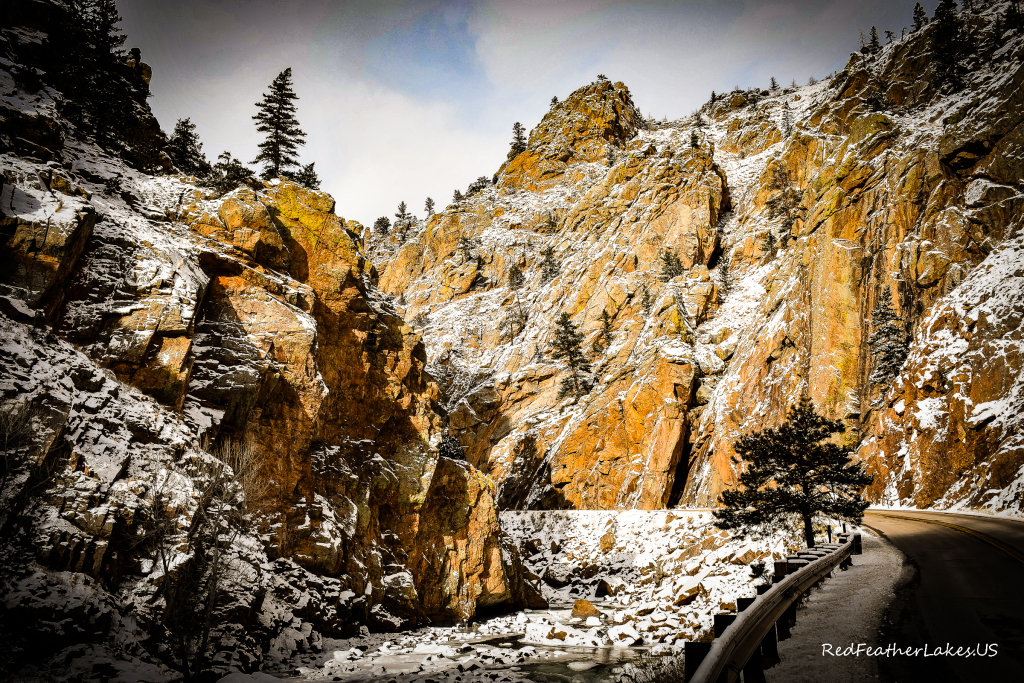
Developed campgrounds close for the season, but dispersed winter camping is possible for the properly equipped. Access is the catch: Highway 14 stays open and plowed through the canyon, but side and forest roads may not be — and this is serious, sub-zero cold-weather camping, not a casual overnight.
Water, dogs, bears & altitude
Is there drinking water at the campsites?
Some developed campgrounds have potable water; dispersed sites never do. Bring all the water you will need, or a reliable way to filter and treat river or lake water.
Are dogs allowed camping here?
Yes — this is wonderful dog country. Keep them leashed or under close control for the wildlife, other campers, and their own safety, and note that wilderness areas and some campgrounds have their own leash rules. The nearest vet is a long drive, so keep a close eye out.
Do I need to worry about bears and mountain lions?
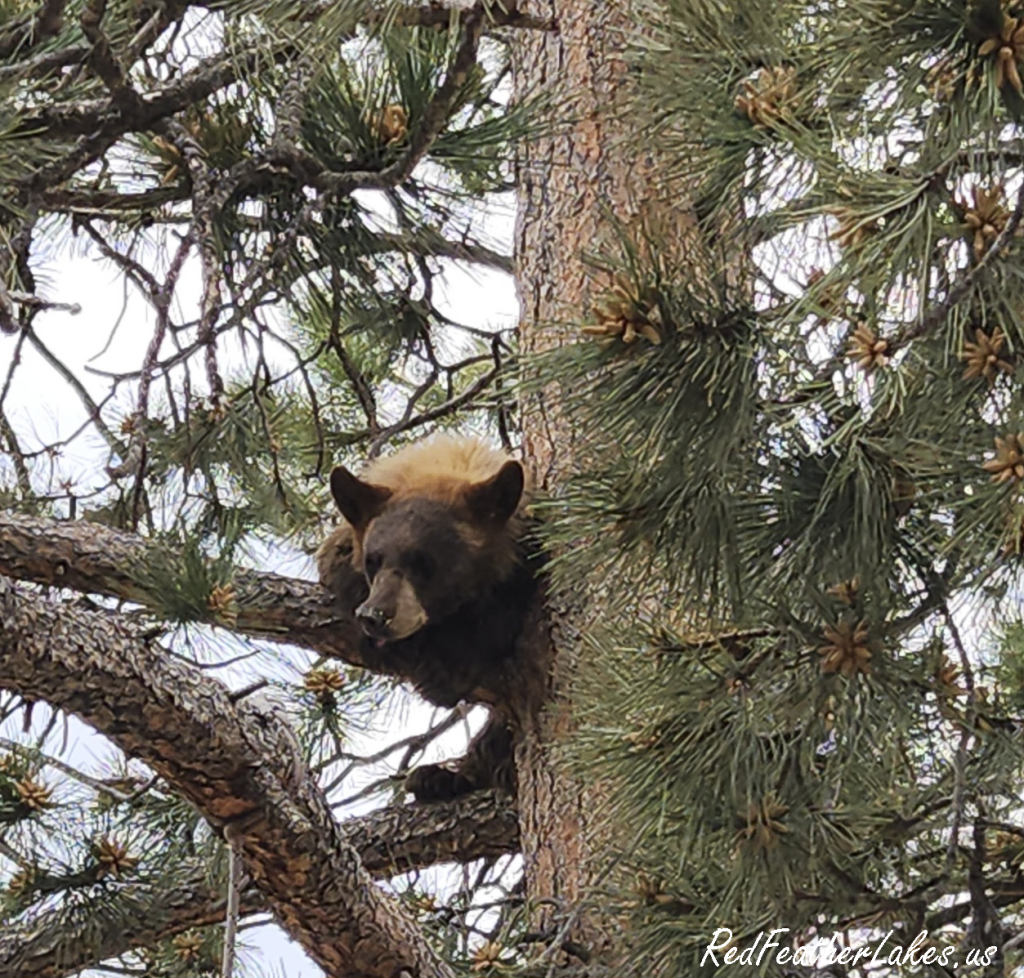
Yes — this is black bear country. Store all food, trash and anything scented in your vehicle or a bear-resistant container, never in your tent. It protects you and the bear: one that learns to raid campsites usually ends up dead. Keep your pets in at night – mountain lions can and will smaller animals.
How high is the elevation, and will altitude affect me?
Camps range from about 5,600 feet at the mouth of the canyon to over 10,000 feet near Cameron Pass. Drink more water than you think you need, take the first afternoon easy to acclimate, and expect cold nights year-round the higher you go.
Staying connected & emergencies
Is there cell phone signal?
Mostly, no. You will get bars in the Red Feather Lakes village and at a couple of landmarks — The Forks and Ted’s Place — but signal is scarce to nonexistent through most of the Poudre Canyon and out at the dispersed sites. Cell service gives out about the time the pavement does, so download your maps offline before you leave town. Consider buying our offline GPS trails app for hiking.
Is there wifi anywhere in the area?
In a few spots. The Mishawaka, the Red Feather Lakes Library, The Hilltop, and Chambers Lake Campground offer public wifi, and Glen Echo Resort has WiFi for its cabin guests (it doesn’t work well at the restaurant). Beyond those, unless you have a portable Starlink (and the generator to run it) plan to be genuinely offline.
What do I do in an emergency with no cell signal?
Head for the nearest fire station — the local stations (Poudre Canyon Fire Protection and the Red Feather Lakes Fire Protection District) have wifi calling with the network passwords posted on-site, so you can reach 911 even with no cell service. We love our firefighters up here where grass fires can start way too easy. Otherwise, drive to a known signal spot (the Red Feather village, The Forks, or Ted’s Place) and call from there. For the backcountry, a satellite messenger or personal locator beacon is worth every penny.
Getting there & the roads
Do I need four-wheel drive to camp here?
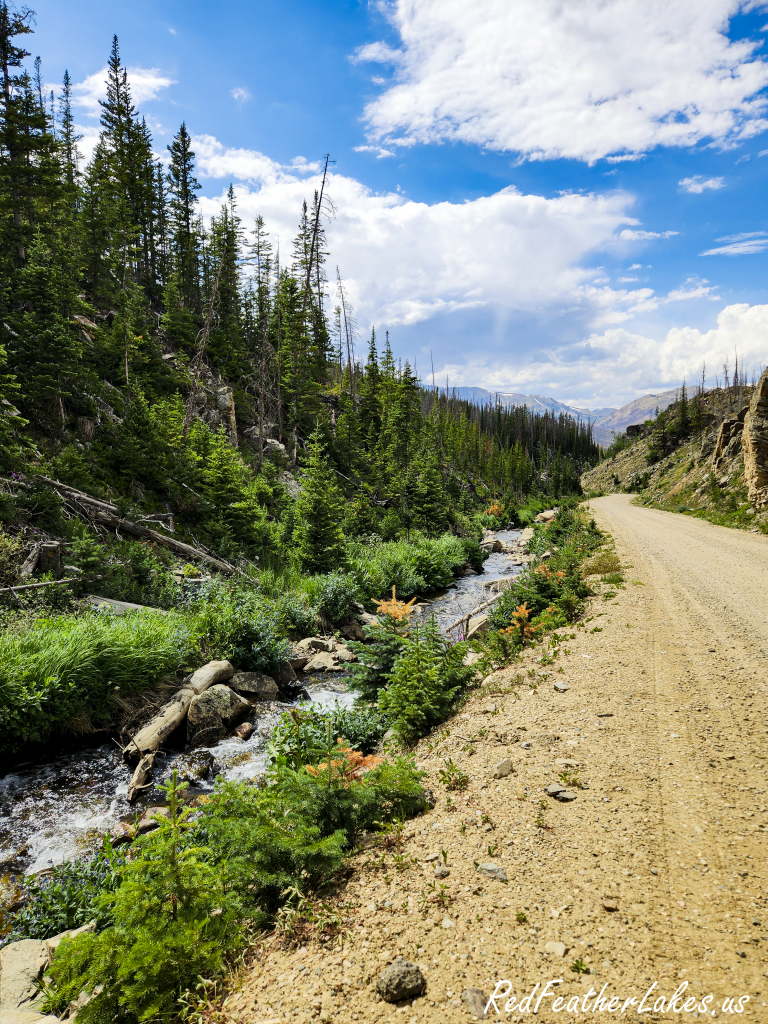
For the developed campgrounds and the Red Feather Lakes village, no — paved highways and maintained roads get you there in any car. For the best dispersed camping (the Lost Lake spurs, the rough forest roads off Long Draw and Deadman), yes — you want real high-clearance four-wheel drive, not a crossover.
What are the roads like?
Highway 14 up the Poudre Canyon is paved and open year-round; but snow removal is limited to day time hours. The road to Red Feather Lakes (County Road 74E) is paved to the village. Past that, you are on dirt and forest roads that range from smooth and graded to rutted and rocky — check conditions before you commit, especially after rain or early in the season.
Ready to go?
Fuel up, download your maps while you still have signal, and pick your spot. Start with the Camping & Campgrounds overview, browse the campground guides & maps, or map the whole trip on our Plan Your Trip page. And because the signal gives out fast up here, the Larimer Wilds offline apps keep every trail, road and campsite in your pocket with no bars at all..
20% off all apparel through August 20. Hoodies, sweatshirts and garment-dyed tees — designed in Livermore, Colorado from our own photography, by a husband and wife team. See the sale →

Author: Faye & Chris
We're Faye and Chris, and we live up here in the Rocky Mountains of Larimer County. Everything on this site comes from actually being out in it — Chris is the driver, and Faye is the writer/photographer. Between us we built the Larimer Wilds apps so other people can find this wild mountain country too. We're not a tourism board and nobody pays us to say any of this. We're two people who love, hike, bike and ride Northwest Larimer County and would rather help you do it right than watch you learn it the hard way.