
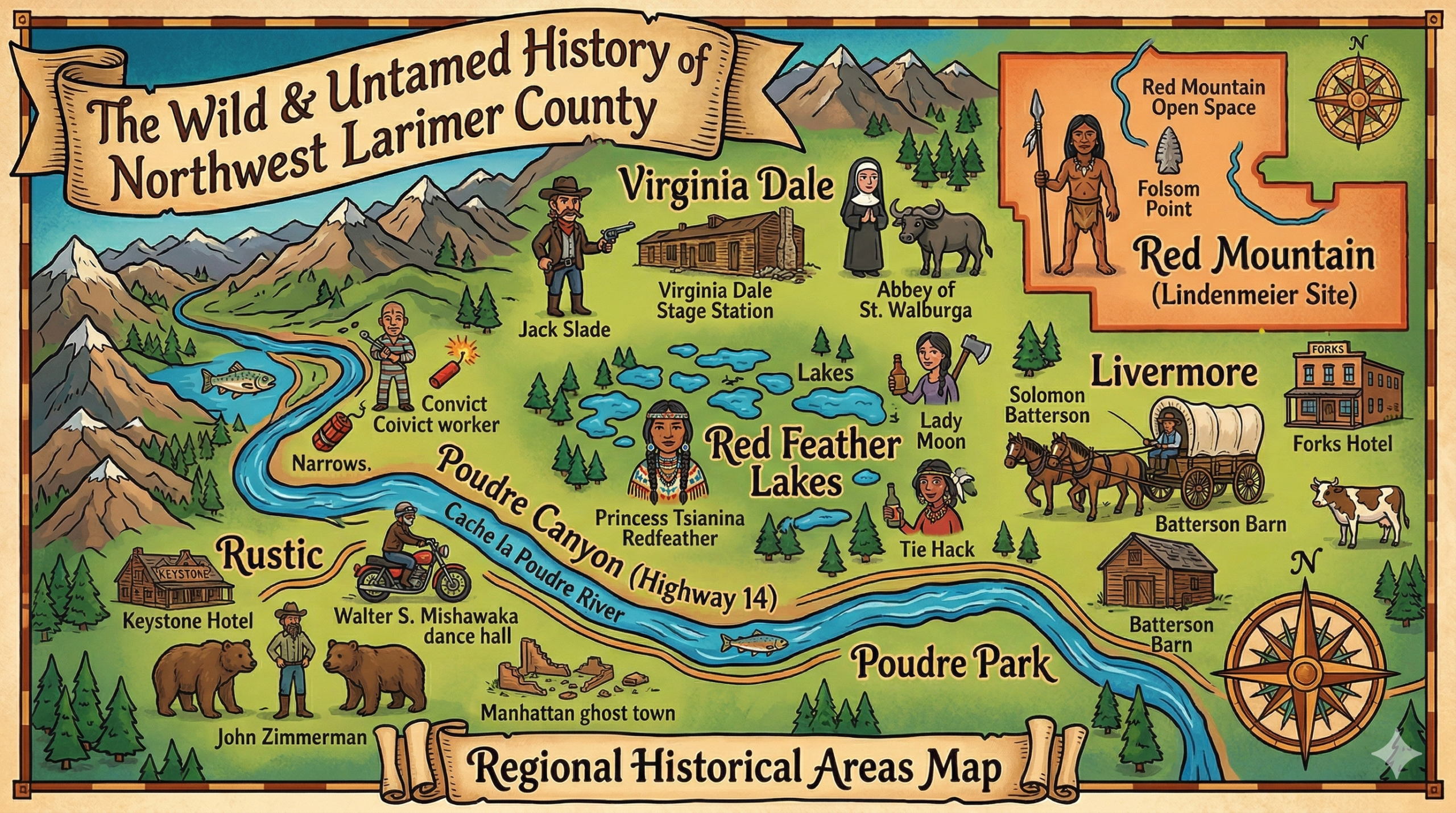
The Wild & Untamed History of Northwest Larimer County
Before the winding asphalt of Highway 14 and the weekend convoys of tourists towing campers, this rugged corner of Northern Colorado was an unforgiving frontier. It was a chaotic, beautiful collision of sheer granite, dense timber, wild rivers, and sweeping high-plains grass.
Long before the first European trappers or tie hacks ever set foot in these valleys, this land was a vital corridor and hunting ground for the Arapaho, Cheyenne, and Ute tribes. They navigated the seasons, following the massive herds of elk and bison through the natural basins and river corridors that we now use for our modern highways and reservoirs.
When the pioneer expansion finally pushed West, the people who chose to stop and settle in Northwest Larimer County weren’t looking for an easy life. The winters were lethal, the isolation was absolute, and the terrain fought them every step of the way. This region was built by cattle barons who survived on grit, outlaws hiding in the canyons, stagecoach drivers outrunning bandits, and tie hacks swinging axes until their hands bled.
When you explore Red Feather Lakes, Livermore, and the Cache la Poudre Canyon today, you aren’t just looking at pretty scenery. You are standing on the shoulders of the toughest men and women the West ever produced. This is their story.
Virginia Dale: Stagecoaches & Scoundrels
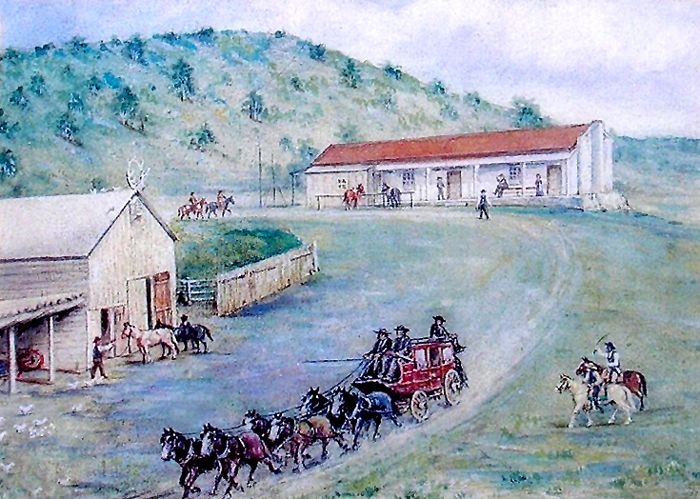
If you wanted to move mail, gold, or wealthy passengers from the civilized East to the wild frontier in the 1860s, you had to survive the Overland Trail. And if you were traveling the Overland Trail through Colorado, your lifeline was the Virginia Dale Stage Station.
Established in 1862, Virginia Dale was nestled in a strategically vital, bowl-shaped valley just south of the Wyoming border. It was the last stop before the treacherous mountain passes, making it an absolute necessity for travelers—and a prime target for outlaws.
The station was a bustling, chaotic hub of the frontier. At any given time, the valley was filled with weary travelers covered in trail dust, heavily armed guards protecting federal mail, and stable hands swapping out exhausted horse teams for fresh ones. It was a place where fortunes were guarded, whiskey flowed freely, and vigilante justice was often the only law of the land. Stagecoach robberies were a constant threat, and the rocky outcroppings surrounding the valley provided perfect hiding spots for bandits waiting to ambush the heavy coaches.
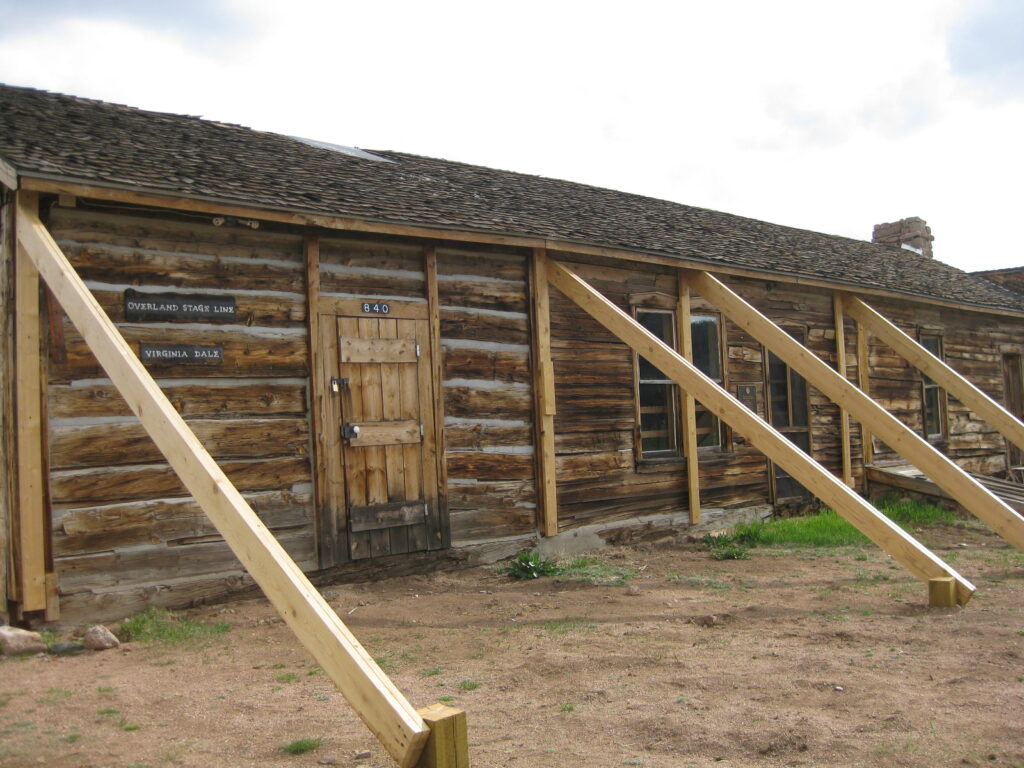
Amazingly, the original Virginia Dale stage station is still standing today. Maintained by a dedicated local historical society, it is one of the only original stage stations left in the entire country, offering a quiet, ghostly window into the most dangerous era of the American West.
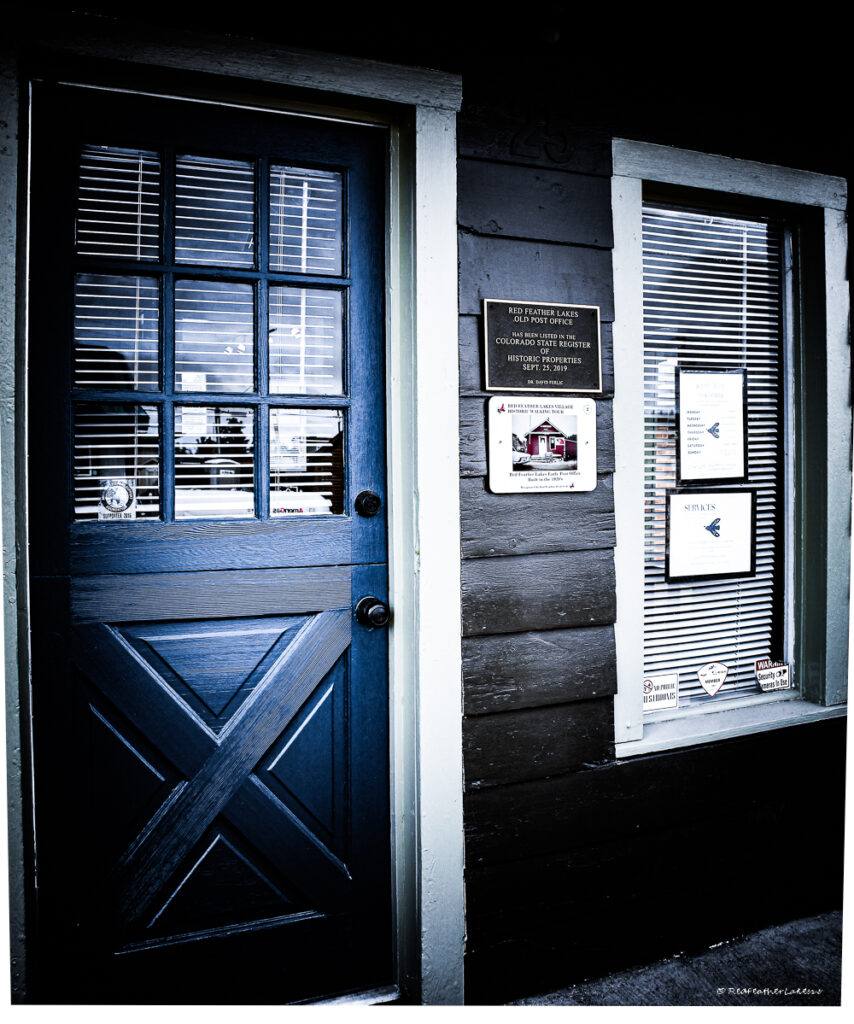
HISTORICAL SPOTLIGHT: The Nuns Who Fled the Nazis and Tamed the High Country
As you drive through the rugged, wind-swept hills of Virginia Dale, you might pass a gate with a highly specific warning sign: “This is God’s country. Please don’t drive through it like hell.”
Beyond that gate lies the Abbey of St. Walburga—and one of the most fascinating pioneer stories in modern Colorado history.
The story begins in 1935 in Eichstätt, Germany. As Hitler and the Nazi regime rapidly rose to power, the Abbess of the original St. Walburg Abbey realized her community was in grave danger. Seeking a safe haven, she quietly sent three Benedictine nuns across the ocean to America. They eventually landed in Boulder, Colorado, turning a barren, rocky plot into a flourishing farm.
But by the 1990s, Boulder’s population had exploded, and the quiet dirt road outside their abbey had transformed into a noisy commuter highway. Seeking the true, unbroken silence required for their contemplative way of life, the community looked north. In 1997, they packed up and relocated to a 250-acre ranch in the remote, sweeping valleys of Virginia Dale.
Today, the Abbey of St. Walburga is home to over 20 cloistered, contemplative Catholic nuns. While they dedicate their lives to praying the Divine Office seven times a day, they are also fiercely capable high-country ranchers. Living out the Benedictine motto of “Ora et labora” (prayer and work), the sisters actively run the farm themselves—in full-length habits. They raise grass-fed Angus and Galloway beef cattle, tend to llamas, and even milk a water buffalo named Louisa May. Whether chanting ancient psalms or breaking up fights between 2,000-pound bulls, the Sisters of St. Walburga are a living testament to the enduring grit and sanctuary of the Colorado frontier.
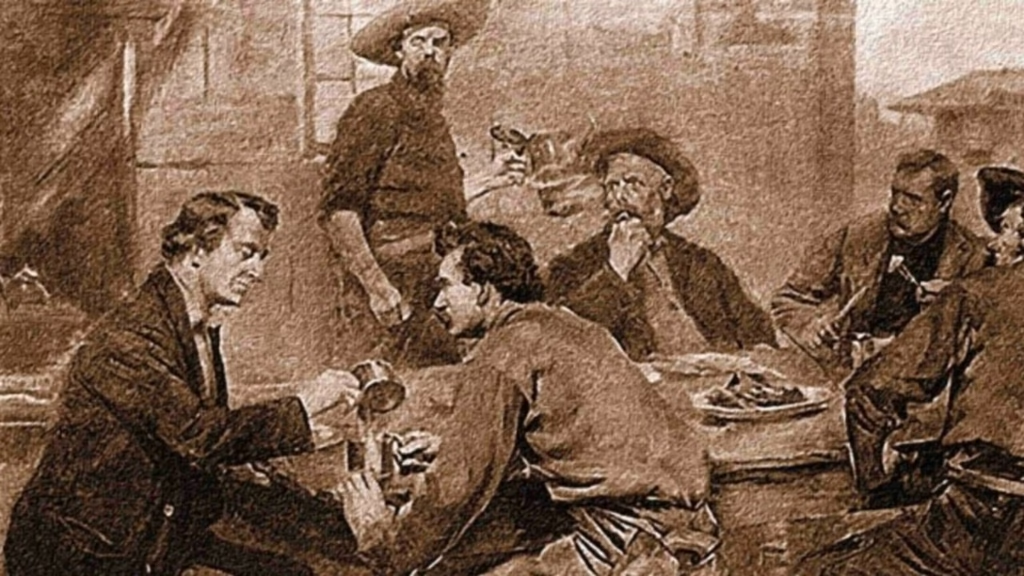
PIONEER SPOTLIGHT: The Deadly (and Charming) Jack Slade
If you traveled the Overland Trail through Northwest Larimer County in 1862, your life was largely in the hands of one man: Joseph A. “Jack” Slade.
Slade was the division agent for the Virginia Dale stage station—which he personally named after his fiercely loyal wife, Virginia. His job was to keep the mail and the stagecoaches moving through the perilous foothills, a task he accomplished by being significantly more dangerous than the outlaws who tried to rob him.
Slade was a notorious gunfighter with a notoriously short temper. He famously tracked down and killed a corrupt former station manager named Jules Beni, and legend has it that Slade carried Beni’s ears around in his pocket as a gruesome warning. Under his watch, the Virginia Dale station was a fortress, and the mail always arrived on time.
But Slade had a bizarre duality to him. When a young, unknown writer named Mark Twain passed through the Virginia Dale station, he was terrified to meet the infamous gunslinger. Instead, Twain wrote in his classic book Roughing It that Slade was surprisingly polite, well-spoken, and even offered Twain the last cup of coffee in the pot.
Slade’s affinity for heavy drinking eventually made him too wild even for the frontier. After leaving Virginia Dale and moving to Montana, his drunken, violent benders became so destructive that a group of local vigilantes finally decided they had enough and hanged him in 1864.
Red Mountain: The Ancient Open Range
As you move south from the Wyoming border, the mountains temporarily give way to vast, sweeping landscapes of red rock and high-plains grass. This is the Red Mountain Open Space.
While the cattle barons of the late 1800s prized this area for its endless, open grazing land, the history of Red Mountain goes back much, much further than the pioneers. In fact, it holds one of the most significant archaeological secrets in North America.
Tucked into this landscape is the Lindenmeier Site. In the 1920s, locals discovered ancient artifacts eroding out of an arroyo. When archaeologists investigated, they uncovered a massive, undisturbed camp used by the Folsom people—ancient hunter-gatherers who lived in this exact spot over 10,000 years ago. The site yielded thousands of ancient tools, weapons, and the bones of extinct Ice Age bison, proving that humans have recognized the strategic and life-sustaining value of this specific region since the end of the last Ice Age.
The Crimson Bottleneck of the West
Fast forward a few millennia to the pioneer era, and those same stunning geological features became a formidable obstacle. According to historical archives from the Fort Collins Museum of Discovery, Red Mountain acted as a massive geographic wall separating the flat expanse of the Great Plains to the east from the Laramie Basin to the west.
Its steep crimson and tan rock formations, deep canyons, and sandy washes made direct, large-scale westward movement nearly impossible. Instead of a wide-open frontier, the landscape created a rugged bottleneck. It forced the famous Overland Trail—the crucial 19th-century artery for emigrants, miners, military patrols, and the mail stage—to squeeze through specific, highly constrained gaps in the rock.
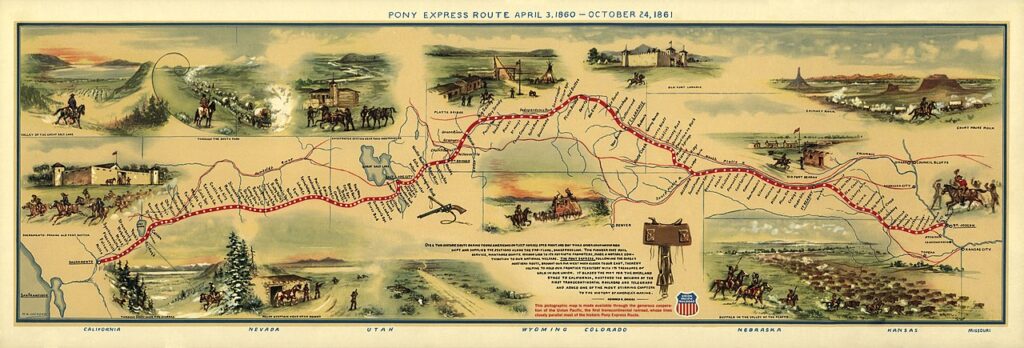
American Indians & The Overland Trail
Long before the heavy stagecoaches arrived, these hidden corridors and workable passages were heavily utilized by the Arapaho and early European fur trappers who knew how to navigate the natural maze. This dramatic geological interruption didn’t just isolate the high mountain communities from the plains; it dictated exactly where human history could travel, turning Red Mountain into one of the most critical and challenging gateways of the American West.
Livermore: The Ranching Backbone
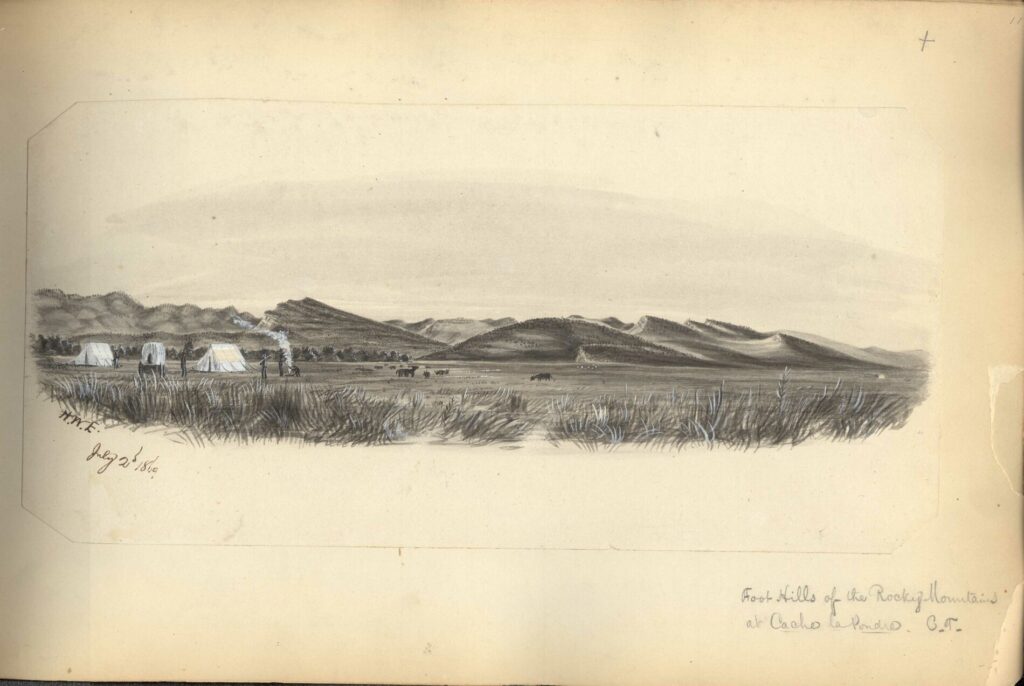
Before you hit the steep, winding climb to Red Feather Lakes or the sheer granite walls of the Poudre Canyon, you have to pass through Livermore. This is where the Great Plains violently collide with the Rocky Mountains. It is a landscape of rolling foothills, relentless wind, and tough prairie grass—the exact kind of country that attracted pioneers with iron wills.
y, the original Virginia Dale stage station is still standing today. Maintained by a dedicated local historical society, it is one of the only original stage stations left in the entire country, offering a quiet, ghostly window into the most dangerous era of the American West.
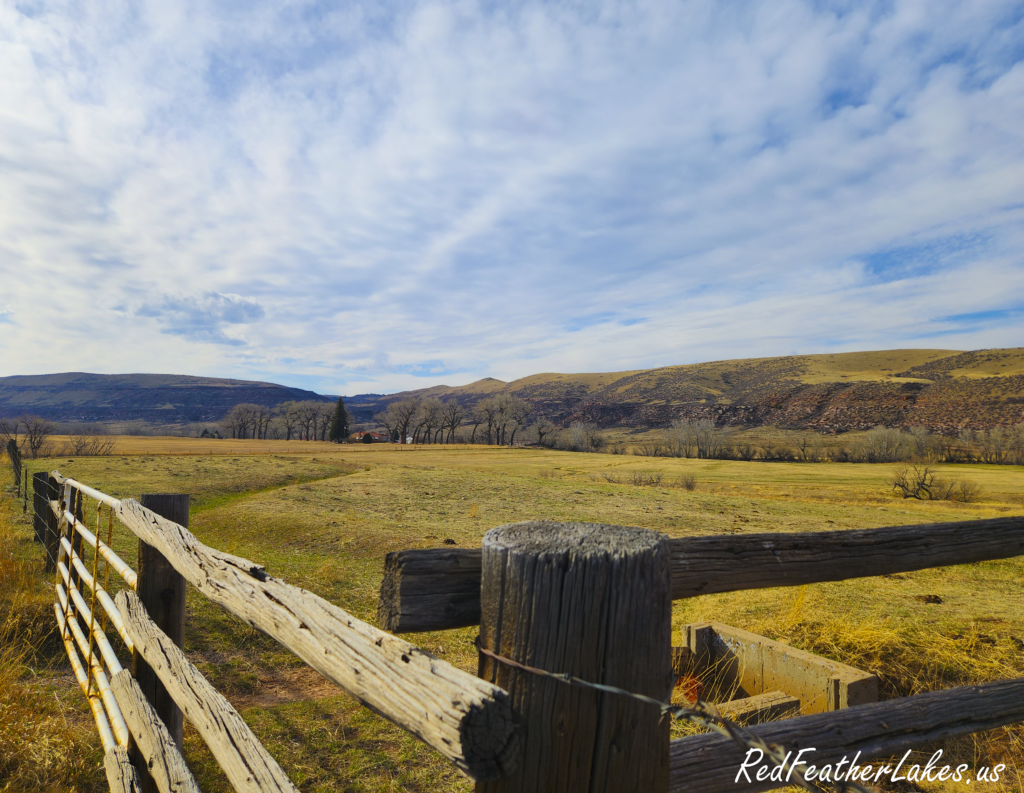
PIONEER SPOTLIGHT: The Batterson Family: The Engine of the High Country
To truly understand the grit of Livermore, you have to look at the story of Solomon and Mary Batterson.
On August 11, 1870, the Battersons arrived in the Cache la Poudre valley via covered wagon. They were driving two teams of horses and eight head of cattle, intending to make the brutal trek all the way from Iowa to California. However, when they reached this rugged stretch of Larimer County, they abandoned their California plans, homesteaded an initial 160 acres, and eventually grew their property into a sprawling 800-acre ranch.
As gold was discovered further west and the mining boomtown of Manhattan sprang up, the dirt wagon roads through Livermore became highly congested. The steep, unforgiving grades into the high country (like Pingree Hill and Cameron Pass) were notoriously brutal on livestock. Wagons carrying heavy mining freight and stagecoaches packed with tourists frequently bogged down, their animals completely exhausted by the altitude and the incline.
The Battersons saw an opportunity. In 1889, Solomon built a massive Midwest Three-Portal style barn to serve as an official “swing station” on what became known as the North Park Freight Trail & Stage Road.
When struggling stagecoaches reached the Batterson Ranch, they would swap out their exhausted animals for Solomon’s fresh, powerful draft horses. Without the Batterson family’s swing station, the economic development of the mountain communities west of Livermore would have ground to a halt.
Thanks to local preservation efforts, the Batterson Barn and surrounding acreage were officially listed on the National Register of Historic Places as a “Rural Historic Landscape” in 2010—the very first designation of its kind in Colorado.
HISTORICAL SPOTLIGHT: The Legendary Forks: From Ashes to Rebirth
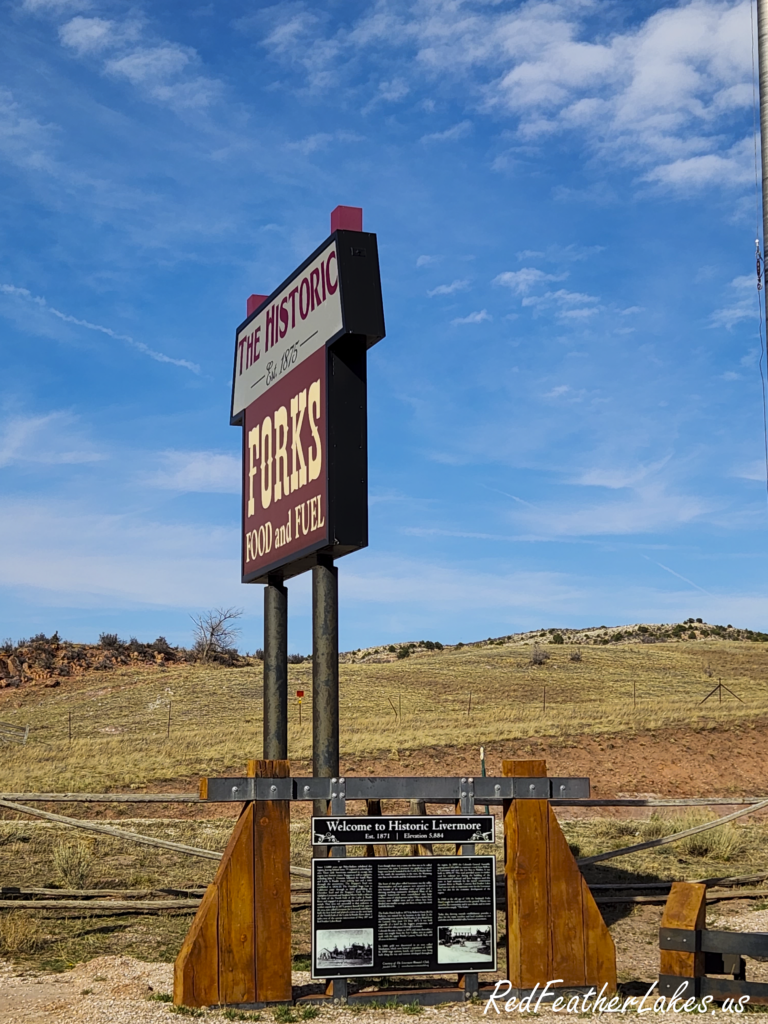
You simply cannot talk about Livermore history without paying your respects to The Forks.
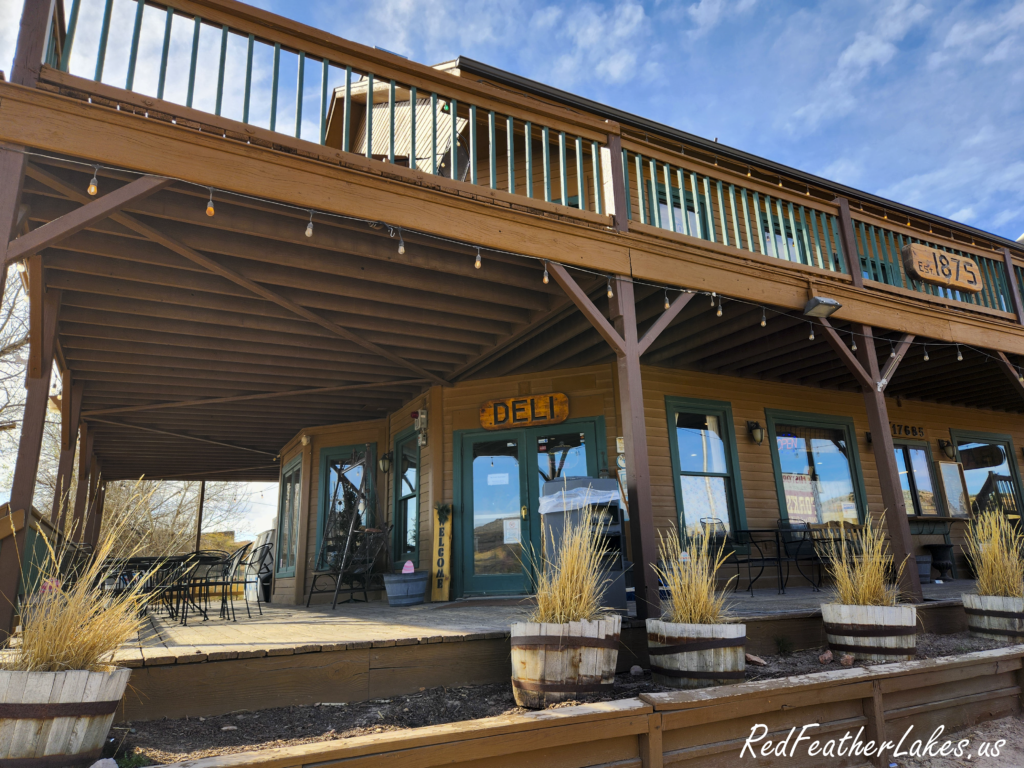
The original wooden structure was built in 1875 right at the junction where the dirt roads split—one heading toward Red Feather Lakes and the other toward the Poudre Canyon.
For over a century, it was the ultimate frontier gathering place. It was the last stop for civilization where ranchers negotiated cattle deals, exhausted tie hacks spent their paychecks, and weary travelers grabbed a hot meal before heading to swing stations like the Battersons’.
Then, on a bitterly cold Friday night, the historic stage stop tragically burned to the ground.
For many towns, that would have been the end of the story.
But following the devastating fire, the locals immediately rallied. They held fundraisers, pooled their resources, and refused to let their central landmark disappear.
The building was painstakingly reconstructed on the exact same site, officially reopening its doors in April 1990. Today, The Forks Mercantile and Saloon operates as a restaurant, bar, deli, and gas station, remaining the beating heart of the Livermore area—a living testament to a community that knows how to rebuild.
Red Feather Lakes: From Tie Hacks to a Mountain Retreat
The high-altitude basins that now hold our community have always been a gathering place, serving as summer camping and hunting grounds for indigenous tribes. But the modern footprint of Red Feather Lakes didn’t begin with recreation; it began with the grueling, bone-chilling labor of the tie hacks.
The Timber and the Tie Hacks
In the late 1800s, America was expanding rapidly westward, and the transcontinental railroad was hungry for wood. The dense pine forests of our high country became a highly valuable resource. Men known as “tie hacks” moved into the area to fell timber and hand-hew railroad ties. They dragged these heavy wooden ties out of the woods and hauled them north to Tie Siding, Wyoming, to feed the Union Pacific Railroad’s relentless march.
The very first permanent settler on record, John Hardin, built his cabin here in 1871, and the rugged trails carved by these early loggers and ranchers eventually formed the crude roads that opened up the area.
The 1920s Resort Vision & The Namesake
By the early 1920s, Front Range locals were already using the high country as a summer escape. But it was a group of ambitious Fort Collins businessmen—including Myron Akin and Dr. D.O. Norton—who saw the true potential of the area. In 1923, they officially incorporated the Red Feather Mountain Lakes Association, planning a massive mountain resort featuring 1,600 plotted cabin lots and a network of sparkling lakes.
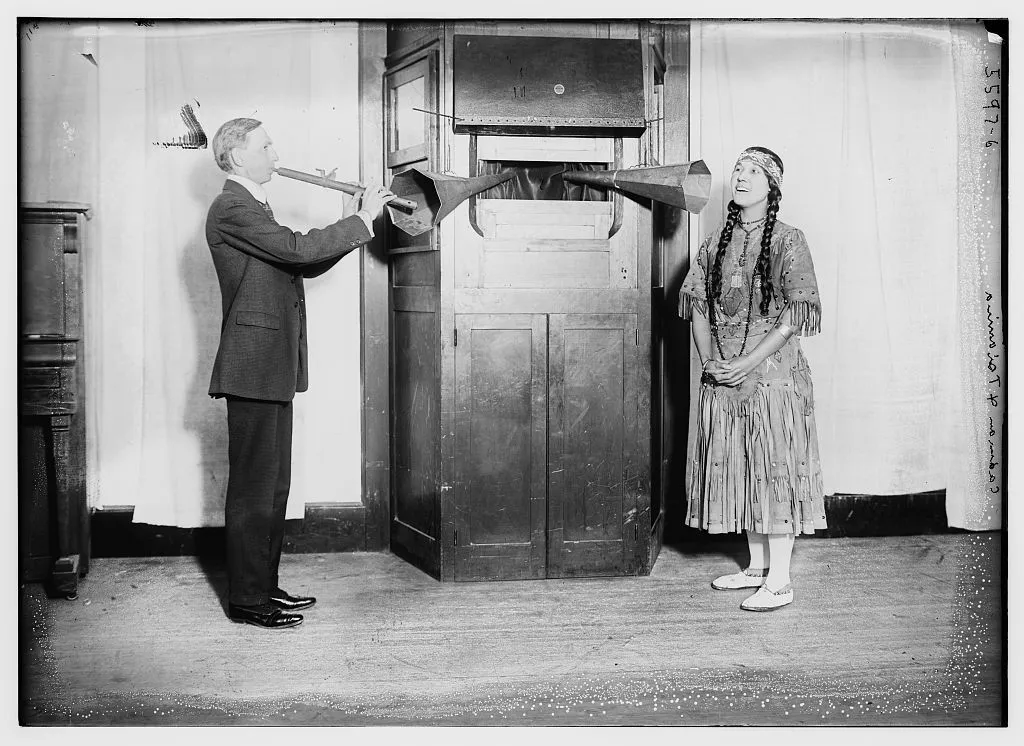
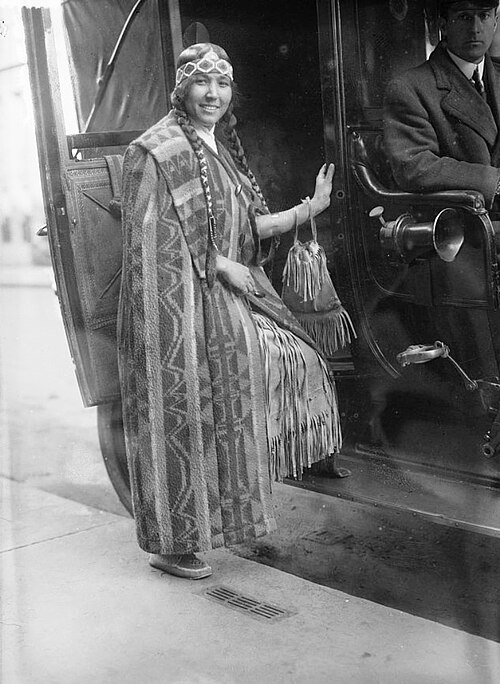
You can thank Dr. Norton for the town’s name. He introduced his business partners to a wildly popular Native American concert singer named Princess Tsianina Redfeather Blackstone, who was touring the country with composer Charles Wakefield Cadman. When asked what her name meant, she replied, “Red Feather”. The developers loved it so much they named a lake after her, and the community soon adopted the moniker.
HISTORICAL SPOTLIGHT: Tsianina Redfeather—The Voice That Refused to Be Silenced
The early 1900s entertainment industry was rarely kind to Native American performers, but Tsianina Redfeather Blackstone (born Florence Evans) was a woman who refused to be used or discarded.
Born in 1882 to a Muscogee Creek and Cherokee family in Oklahoma, Tsianina was a highly trained mezzo-soprano. At age 26, she began touring with Charles Wakefield Cadman, a white composer who was part of the “Indianist” movement—a group of musicians who built lucrative careers by adapting Native American music for white audiences.
While the dynamic of a white composer profiting off Indigenous culture was highly complex, Tsianina was no passive participant. She used Cadman’s massive platform to her own advantage, taking the stage in traditional beaded buckskin to actively educate thousands of people and, as she wrote in her autobiography, to “tell the truth about the Indian race”. She even provided the semi-autobiographical plot for Cadman’s 1918 opera, Shanewis (The Robin Woman), which made history at the Metropolitan Opera in New York.
Her fierce independence extended far beyond the stage. During World War I, Tsianina became one of the first women to volunteer to entertain troops overseas. She led a YMCA-sponsored troupe of Native American performers into France and Germany, becoming the first woman to cross the Rhine River to reach U.S. soldiers.
When the “Indianist” music craze eventually faded, Tsianina didn’t fade with it. She retired from singing entirely on her own terms in 1935 and immediately pivoted her immense energy toward political activism. She spent the second half of her life fighting for her people, helping to found the American Indian Education Foundation and serving for 30 years on the board of the School of American Research.
Tsianina passed away in 1985 at the remarkable age of 102. She left behind a legacy not as a novelty act, but as a brilliant, resilient advocate who used the spotlight to elevate her entire community
The Crash, The CCC, and Securing the Water
The early resort days were buzzing until the stock market crash of 1929. Land sales completely halted. Salvation came in the form of the New Deal. In 1935, the Civilian Conservation Corps (CCC) set up a camp near the village. Under the guidance of foreman “Red Feather Lou” Young, nearly 200 men arrived to build roads, trails, and public works projects that literally laid the foundation for the town we navigate today.
The final piece of the Red Feather puzzle is the water. While local lore sometimes claims the lakes are entirely man-made, they are a complex system of enhanced natural basins, dams, and dikes originally created to capture irrigation water for the plains. In 1948, the Red Feather Storage and Irrigation Company was formed. This company acquired the water rights, keeping the private village lakes (like Ramona, Hiawatha, and Erie) for the community, while deeding the larger surrounding waters (Dowdy, West Lake, and Bellaire) to the state’s Game & Fish department for public recreation.
PIONEER SPOTLIGHT: Lady Moon (aka “Cussin’ Kate”)
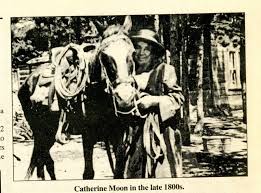
Did you know that the real Lady Moon—the namesake for local trails, streets, a historic ranch, and a local floral design business—was one of the most fiercely independent women in Northern Colorado history?
Born Gratten Catherine Lawder on a ship on May 17, 1865, as her parents emigrated to the US during the Great Potato Famine, “Katie” moved to the area in 1883. She worked at Norman’s Elkhorn Lodge and the Log Cabin Stage Coach Stop & Resort as a laundry woman, parlor maid, and waitress.
After a brief marriage to a blacksmith named Frank Gartman, she married Cecil Moon, the second son of an English aristocrat. Cecil’s parents were notoriously unhappy with the match—Katie rode her horse astride and severely lacked the manners expected of a “proper” lady. But in 1899, Cecil inherited his family’s titles and fortune, officially making Katie “Lady Moon”.
Over their 21-year marriage, Cecil became a highly successful rancher, utilizing the newly discovered science of genetics. However, Cecil also loved to drink and gamble, so Katie smartly kept the cash box. During their parties, a drunk Cecil would frequently sign property deeds over to Catherine. In the end, she owned everything. Lady Moon holds the distinct honor of being the first woman west of the Mississippi forced to pay alimony to her husband upon their divorce!
While Cecil moved away, Katie stayed behind. When Larimer County enacted prohibition, she became a notorious moonshiner, distilling fine Irish whiskey. She was famously arrested at a party when she fell while dancing, spilling the wares she had hidden in her pantaloons! At trial, she was acquitted for a lack of evidence because the arresting deputies were too intimidated to reach under her skirts to take the bottles.
Lady Moon was a woman of firsts. She loved her animals—taking her favorite horse, Moses, abroad by ship—and was the first person in the area to own a steam-powered automobile. She ordered it from a catalog, picked it up at the Laramie trail station, and drove it home, later declaring that it spooked every animal for 10 miles. She parked it in the barn and never took it out again.
Beyond her wild antics, Lady Moon was deeply known for her kindness and charitable giving. When she died in 1926, she left highly personal gifts in her will to the people who worked for her. Her innovative, brave, and generous spirit undeniably lives on in the history of the high country.
The Cache la Poudre Canyon: From Fur Trappers to Rock & Roll
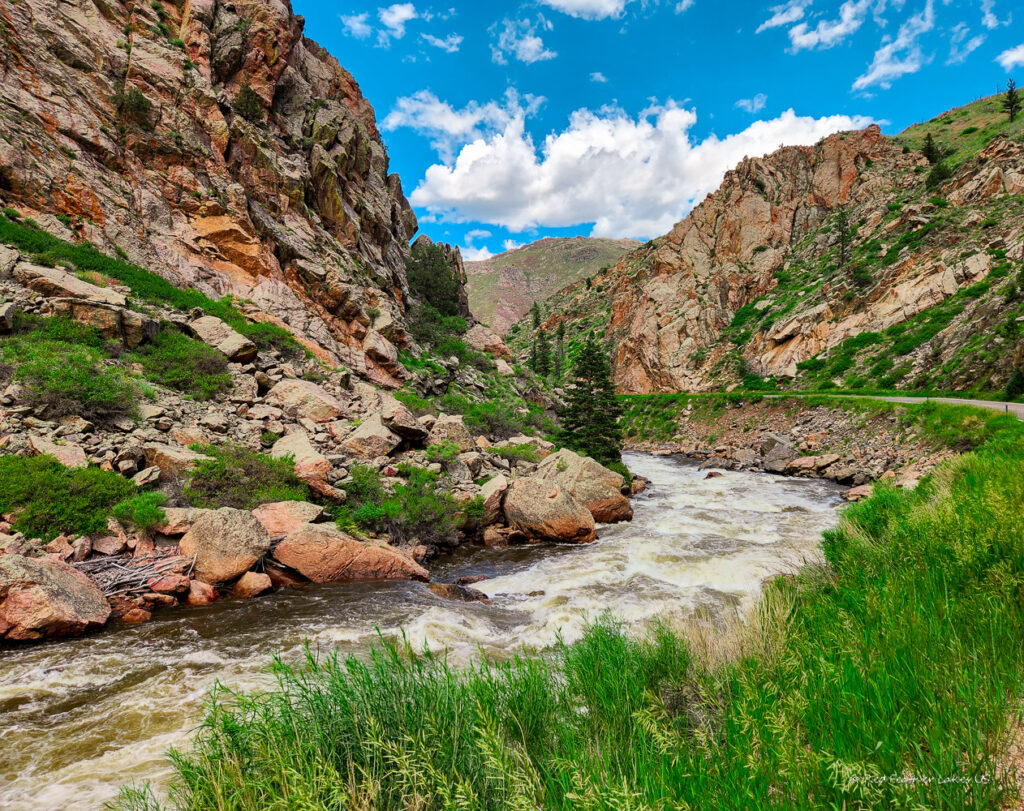
As Colorado’s only nationally designated “Wild and Scenic” river, the Cache la Poudre (pronounced Poo-der) has spent millennia carving a sheer, dramatic gorge through the granite. Navigating this canyon originally required a lethal mix of dynamite, sweat, and sheer stubbornness. To truly understand the history here, you have to follow the river West, traveling upstream through time.
IThe Mouth of the Canyon: Trappers and Water Wars
In the 1820s, a group of French-Canadian trappers were moving a massive wagon train of supplies near the mouth of the canyon when they were hit by a catastrophic blizzard. To lighten their load and survive, they buried hundreds of pounds of explosive gunpowder in a pit near the riverbanks. They survived, and the river was forever named Cache la Poudre—French for “hide the powder”.
Decades later, as early pioneers settled the plains below, bitter fights broke out over who owned that precious water. The disputes over the Poudre River in the late 1800s directly led to the creation of the “Colorado Doctrine” of water law (“First in time, first in right”)—a legal framework that still governs the entire Western United States today.
Poudre Park: Homesteads to Havens
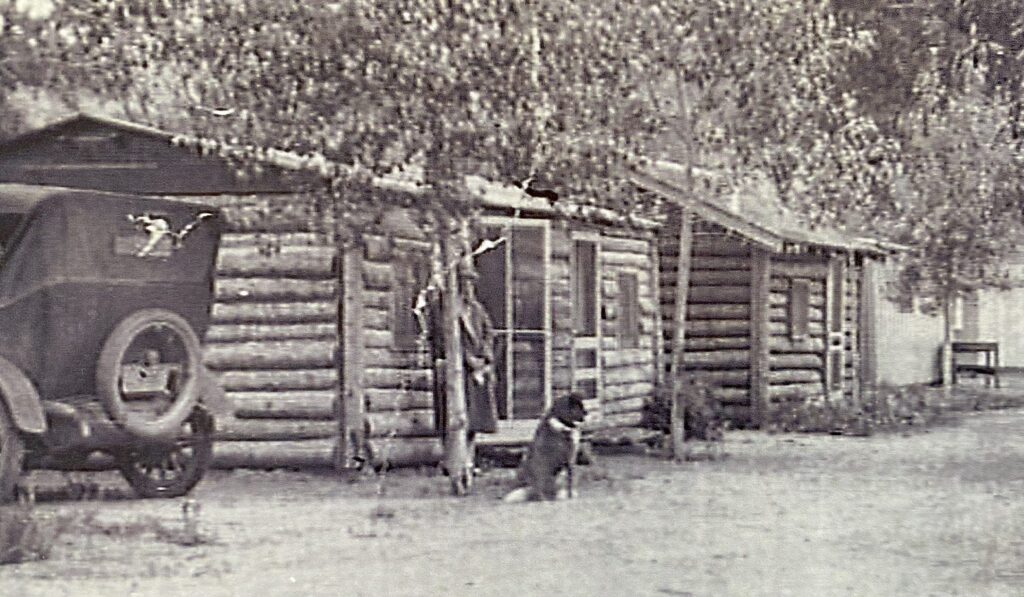
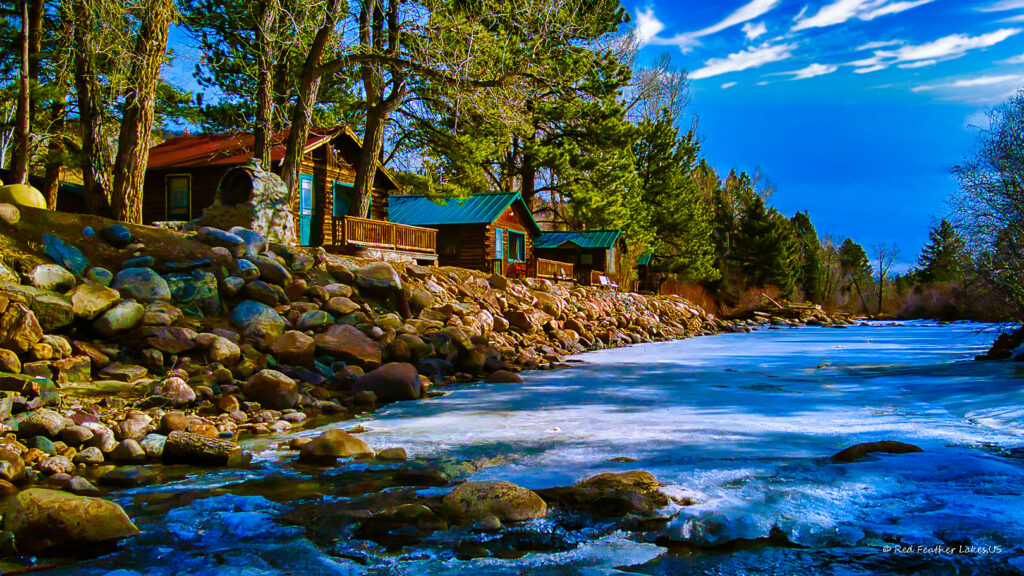
As you drive the first winding stretch into the canyon, the terrain is incredibly steep. The early pioneers who staked claims in the side-canyons near modern-day Poudre Park weren’t looking for luxury. They were hardscrabble homesteaders carving out a life by logging, hunting, and running small cattle operations. Over the decades, as automobiles made the lower canyon slightly more accessible, Poudre Park transitioned from a rugged pioneer outpost into a beloved summer retreat of historic cabins built directly onto the rocky banks.
The Mishawaka: A Motorcycle, a Dream, and a Dance Hall
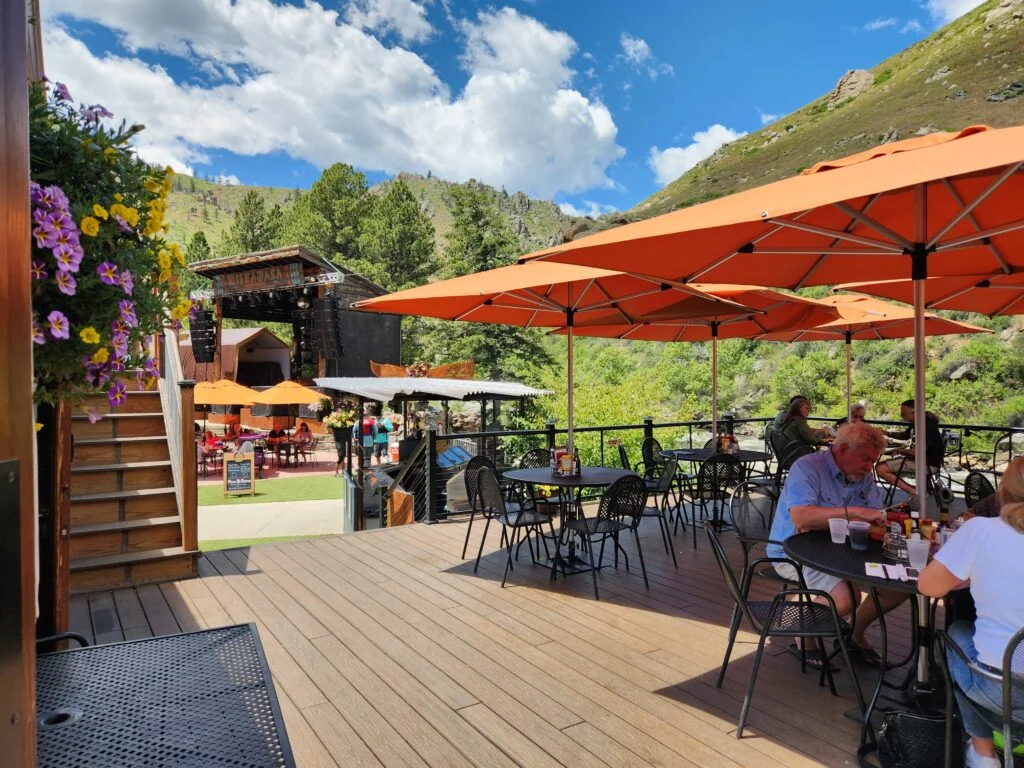
Just a few miles west of Poudre Park sits one of the canyon’s most legendary landmarks. In 1916, a Fort Collins musician named Walter S. Thompson took a ride up the rugged dirt canyon road on his motorcycle. He found a pristine piece of land tucked between the river and the cliffs and homesteaded it.
Naming it after his hometown in Indiana, Thompson built a small, wooden dance hall called the Mishawaka. In the 1920s, Front Range locals would endure the bone-rattling drive just to reach his venue and dance to live music. Today, “The Mish” is a world-renowned amphitheater, but the original wooden dance hall is still standing, proving that Thompson’s wild pioneer vision was absolutely correct.
Carving Highway 14: Convicts and Dynamite
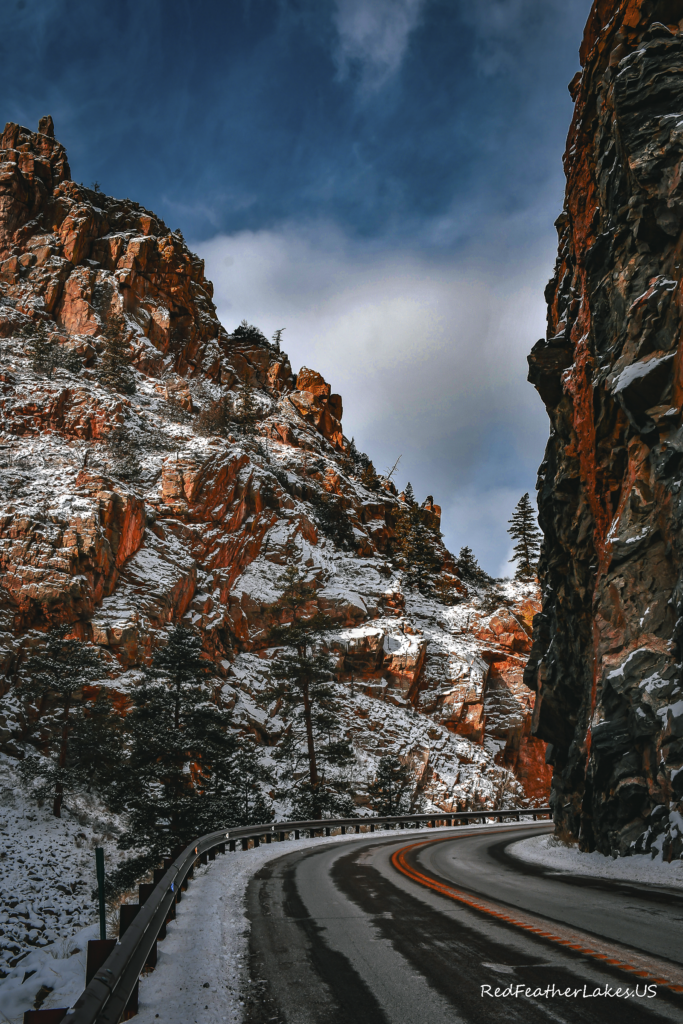
Continuing West, getting a paved road through the tight granite walls was considered an engineering impossibility in the early 1900s. To get the job done, the state brought in inmates from the state penitentiary. Beginning around 1912, these convict crews, armed with pickaxes and massive amounts of dynamite, spent years blasting a single-lane dirt road out of the solid rock. As you drive through the “Narrows,” you are driving on the exact ledges those inmates blasted by hand.
Rustic & The Manhattan Gold Rush
Rustic & The Manhattan Gold Rush As the canyon opens back up, you reach the historic hub of Rustic. Originally built as a stage stop and trading post in the 1880s, Rustic became the vital supply lifeline for the canyon—especially when gold was discovered just to the north in 1886.
Almost overnight, the booming mining town of Manhattan exploded into existence. Within a year, the town boasted hundreds of residents, three hotels, a post office, and multiple saloons. Men poured into the canyon dreaming of striking it rich, packing the dirt roads with heavy freight wagons. But the gold ore was “refractory” (incredibly difficult to extract), and by the early 1900s, the money dried up. Manhattan became a ghost town, leaving Rustic as the enduring gateway to the upper wilderness.
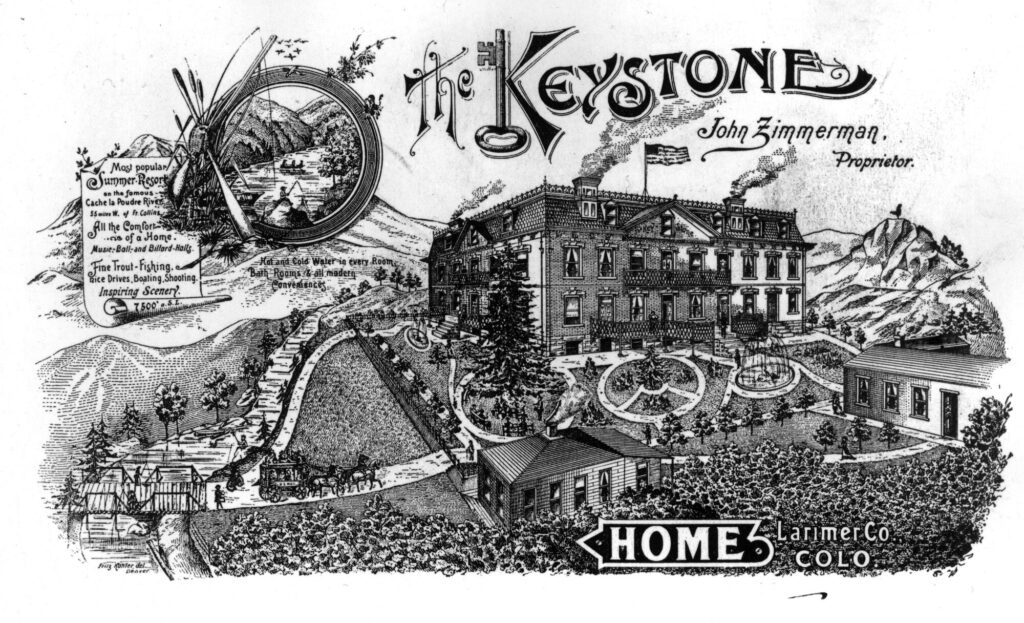
PIONEER SPOTLIGHT: John Zimmerman and the Bears of the Keystone Hotel
While most pioneers in the late 1800s were just trying to survive the harsh winters, a Swiss immigrant named John Zimmerman looked at the sheer granite cliffs and decided it was the perfect place for high-society European luxury.
Zimmerman originally came to the canyon to mine for gold in Manhattan. When the gold didn’t pan out, he pivoted to hospitality. In 1893, near the modern-day town of Rustic, he completed construction on the massive, three-story Keystone Hotel.
The 40-room luxury resort featured incredible novelties for the time, including hot and cold running water in the rooms and fine silver and china in the dining hall. Zimmerman and his family catered to wealthy tourists and European nobility who would take the grueling two-day stagecoach ride up the canyon just to stay there.
To give his wealthy guests a taste of the “Wild West,” Zimmerman kept a menagerie of wild animals on the property, including mountain lions, coyotes, and most famously, a pair of live black bears that he had trained. The Keystone Hotel operated as the glittering jewel of the Poudre Canyon until the late 1940s when it unfortunately burned to the ground.
Conclusion: Preserving the Heritage of the High Country
The story of Northwest Larimer County isn’t just trapped in black-and-white photographs; it is a living, breathing legacy of survival.
The people who carved these towns out of the granite and the prairie grass were defined by their sheer grit. That resilience didn’t fade with the pioneers. When the original Forks Hotel burned down, the locals rebuilt it. When the devastating Cameron Peak Fire of 2020—the largest wildfire in Colorado history—ripped through this very canyon and the mountain communities, the residents stood their ground, supported the firefighters, and rebuilt the scarred landscapes.
When you drive Highway 14, hike the trails of Red Feather Lakes, or grab a beer in Livermore, you are walking in the footsteps of tie hacks, stagecoach drivers, outlaws, and visionary nuns. You are visiting a place that refuses to be tamed.
Help Us Protect This Legacy As a visitor, you are now part of this story. You can help us preserve the independent spirit of the high country by practicing mindful destination stewardship.
When you book a stay, buy a cup of coffee, or hire a local fishing guide, you are directly supporting the modern pioneers who chop the wood, plow the snow, and keep the lights on in these mountains. Skip the corporate chains down in the city. Keep your tourism dollars local, respect the wildness of the landscape, and help us ensure that the micro-economy of Northwest Larimer County thrives for another hundred years.
References & Historical Sources
- Colorado Encyclopedia. “Ute, Arapaho, and Cheyenne Indigenous Territories.”
- Overland Trail Historic Stage Stations. “Virginia Dale Stage Station History.”
- Blevins, Tim, et al. Tough Times in Rough Places. Pikes Peak Library District. (Jack Slade historical accounts).
- Twain, Mark. Roughing It. (1872). (Accounts of Slade at the Virginia Dale station).
- The Coloradoan. “Nuns at Abbey of St. Walburga farm, pray in Virginia Dale.”
- Abbey of St. Walburga. Official Community History and Archives.
- National Park Service. “Lindenmeier Site: National Historic Landmark.”
- Fort Collins Museum of Discovery. Local History Archives. “The Geographical and Historical Significance of Red Mountain Open Space and the Overland Trail.”
- Larimer County Genealogical Society. “Livermore, Colorado Pioneer History.”
- National Register of Historic Places. “Batterson, Solomon and Mary, Ranch / Batterson Barn.” Registration Form (2010).
- The Forks Mercantile and Saloon. “History of the Forks.” Local archives.
- Red Feather Historical Society. “History of Red Feather Lakes, Colorado.”
- Red Feather Storage and Irrigation Company. Historical Water Rights Documentation.
- Local historic archives and pioneer records of Gratten Catherine Lawder (“Lady Moon”).
- Cache la Poudre River National Heritage Area. “The Legend of the Cache.”
- Colorado Foundation for Water Education. “The Cache la Poudre River and the Colorado Doctrine.”
- Mishawaka Amphitheatre. “The History of The Mish.”
- Colorado Department of Transportation (CDOT) Archives. “Highway 14 and Convict Labor.”
- Jessen, Kenneth. Ghost Towns, Colorado Style. (History of the Manhattan Gold Rush).
- Poudre Landmarks Foundation / Local historical records regarding John Zimmerman and the Keystone Hotel.
- Blackstone, Tsianina Redfeather. Where Trails Have Led Me. (1968). (Autobiographical account of her early life, Cadman tours, and WWI service).
- Metropolitan Opera Archives. Shanewis (The Robin Woman). (1918 performance records and production history).
- Johansen, Bruce E. Native Americans Today: A Biographical Dictionary. (Details on her retirement from music and founding of the American Indian Education Foundation).
- School for Advanced Research (SAR) Archives, Santa Fe, New Mexico. (Historical records of Tsianina Blackstone’s 30-year board service and Native American education advocacy).